September 7, 2026
I am not happy with the steering rack mounting. The small square tubes beneath the mounts used to secure the rack look like a piece of industrial machinery, and I have no idea how to neatly connect them to the chassis. So, this needs to change. Back to the drawing board.
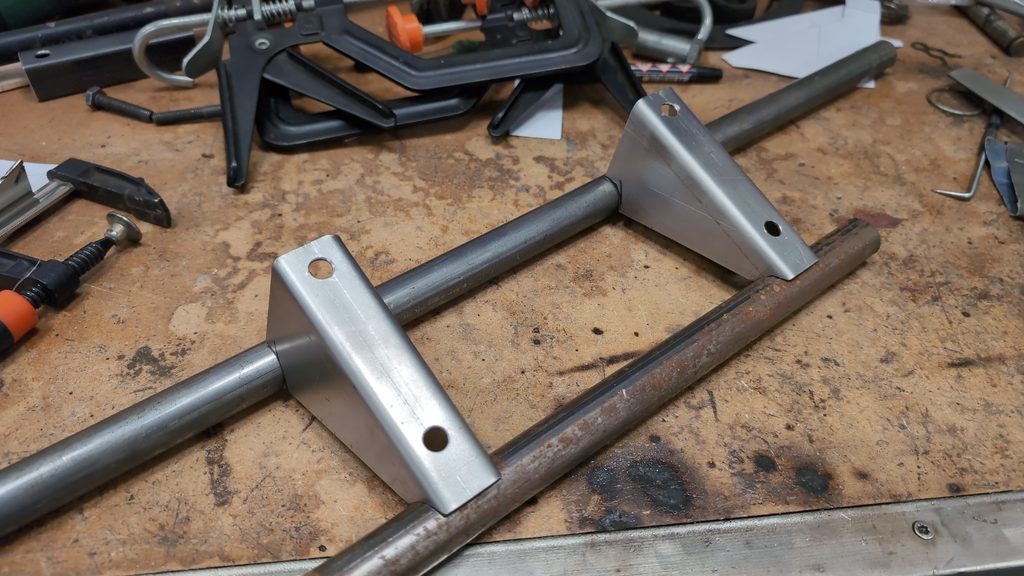
I’m starting over. After taking a closer look at how the steering rack is mounted in a Ford Escort, I come up with a new design. I fabricate two new sheet-metal brackets that attach to two crossmembers in the chassis. This looks much more promising.
September 13, 2026
I’m still happy with the steering rack mounting, so it’s time to install it in the car. First, I weld some nuts onto the back of the sheet-metal brackets; I’ll be grateful to myself for that later. Next, I weld the brackets to the front crossmember, spaced correctly. Then, I tack-weld the whole assembly into the car. Unfortunately, it’s crooked, so I have to cut it out and try again. Finally, I weld the rear crossmember into the car and to the brackets.
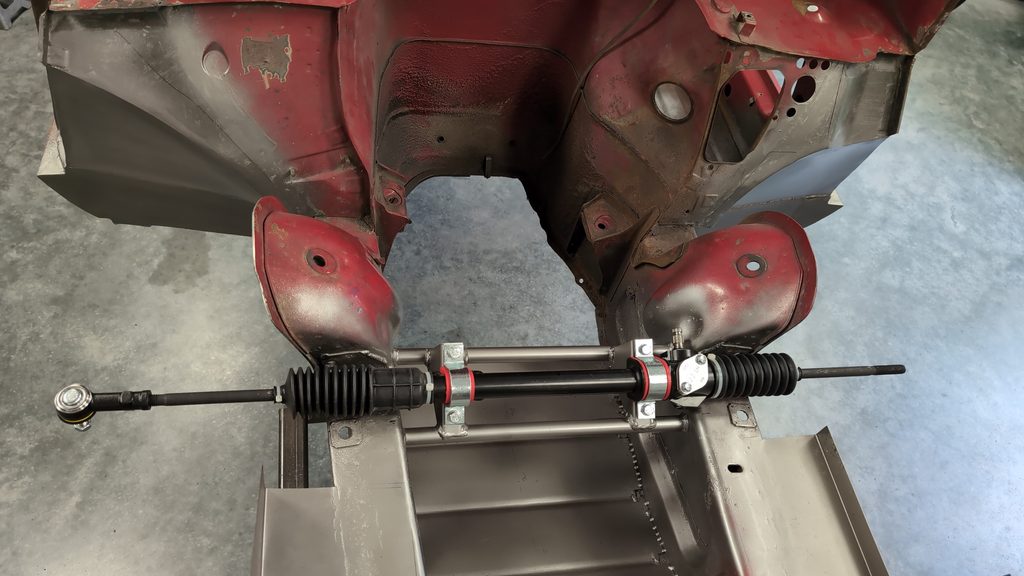
Lastly, I try out the Corsa C steering column. It’s quite a bulky unit to tuck away under the dashboard. Installing this steering column won’t be easy. Perhaps I should look into some other alternatives?
September 15, 2026
After searching for more compact steering columns, I come across the one from the Opel Agila. The first-generation Agila featured an EPAS system that operates using analog signals—perfect for my application. I find a steering column at a reasonable price on Marktplaats.
September 20, 2026
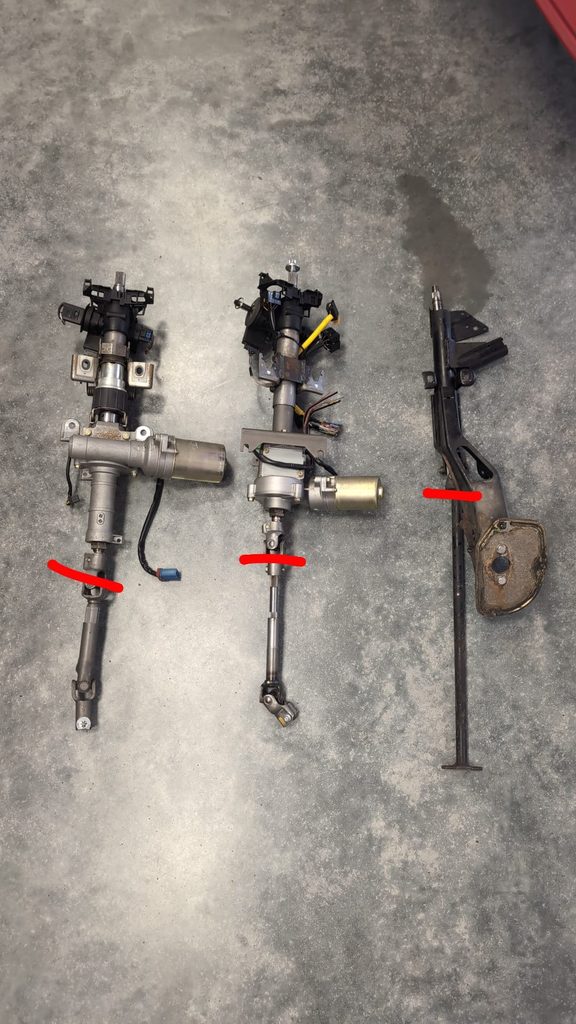
Today, I start by trying out the Agila steering column. Fitting it is proving to be a bit of a challenge. The major difference compared to the original steering column lies in the length of the section where the steering wheel attaches to; on the original column, this part is quite short. Even so, viewed from above, the steering wheel sits at an angle within the car. The longer the upper section of the steering column, the more angled the steering wheel becomes. I also give the Corsa steering column another try. It has an even longer upper section but also features an extra pivot point. This extra pivot point is intended for steering wheel height adjustment, but it can be used to align the steering wheel more squarely within the car. On the left of the photo is the Corsa C steering column; in the middle, the Agila A; and on the far right, the R5 steering column.
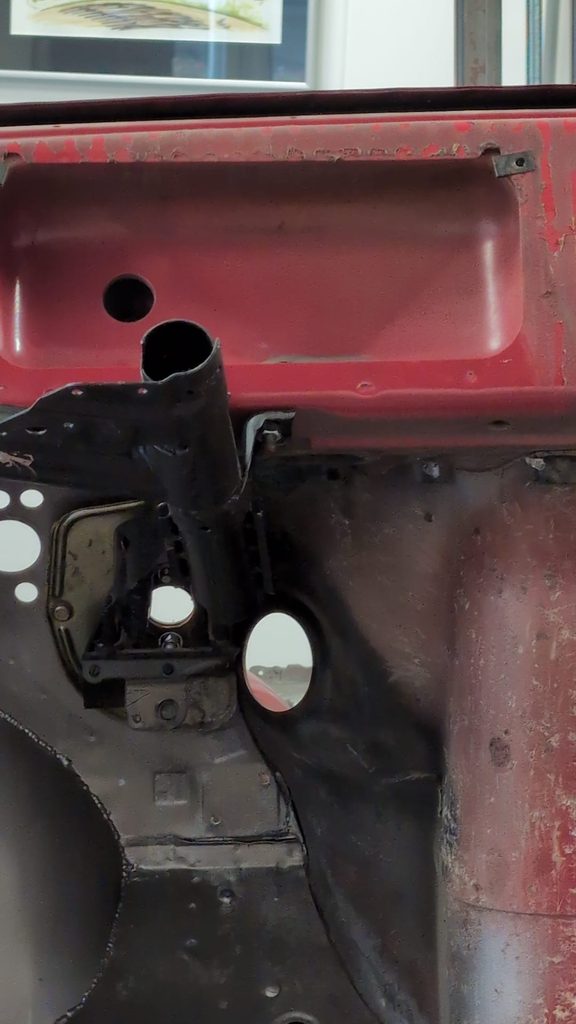
After a lot of trial and error, I conclude that the only way this will work is if I keep the universal joint in roughly the same position as the original. I need to find a way to deal with the extra length. The Agila steering column can be shortened. I’ve noticed that in rally cars, spacers are often used between the steering wheel and the column to bring the wheel closer to the driver—which makes sense, given that rally drivers often sit very close to the wheel. Perhaps I won’t need to cut that much off the steering column after all. I won’t be able to determine that until the seats are installed. For now, I’ll leave it as is.
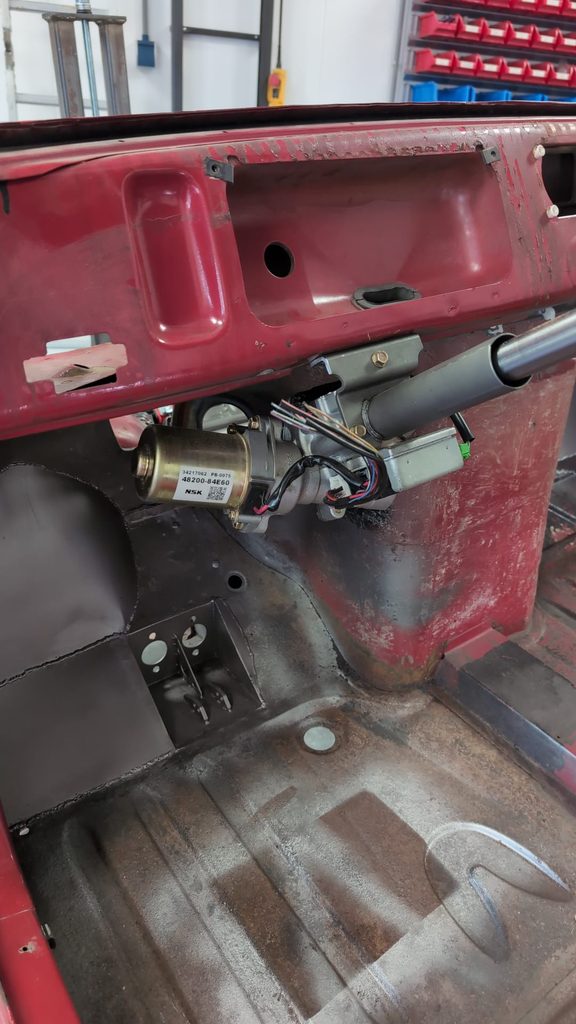
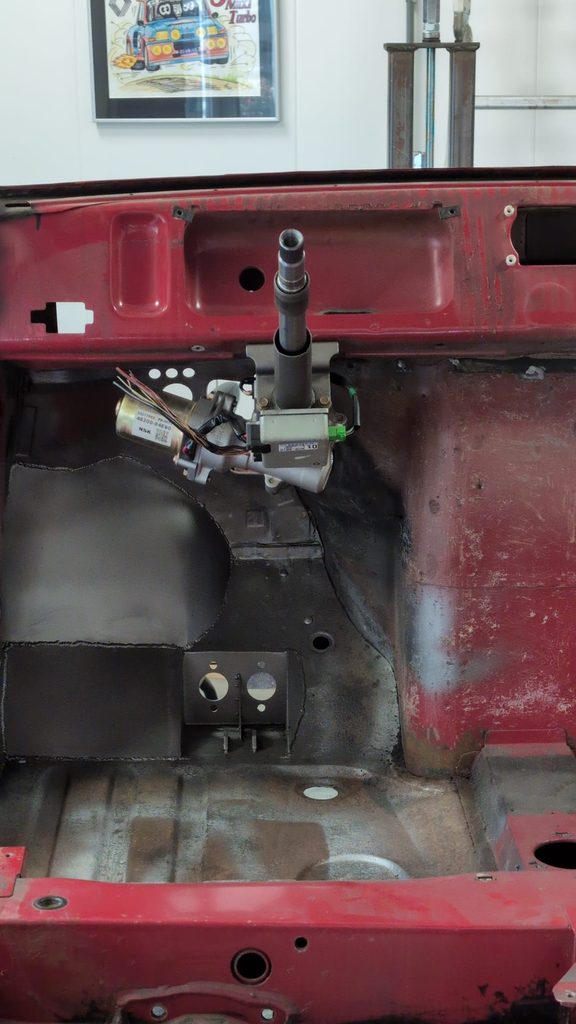
Next, I need to reinforce the whole assembly. I plan to reuse the old steering column to create the connection to the bulkhead. That’s a job for next time.