July 8, 2026
Today I continue with the bulkhead. I still have a large hole to fill. I grind out a piece of sheet metal in the now familiar way.

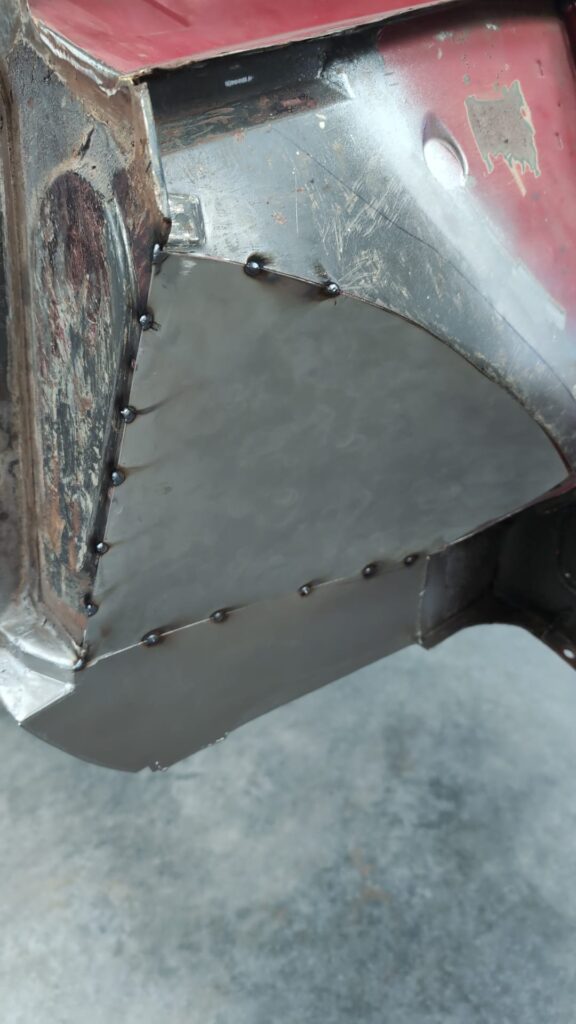
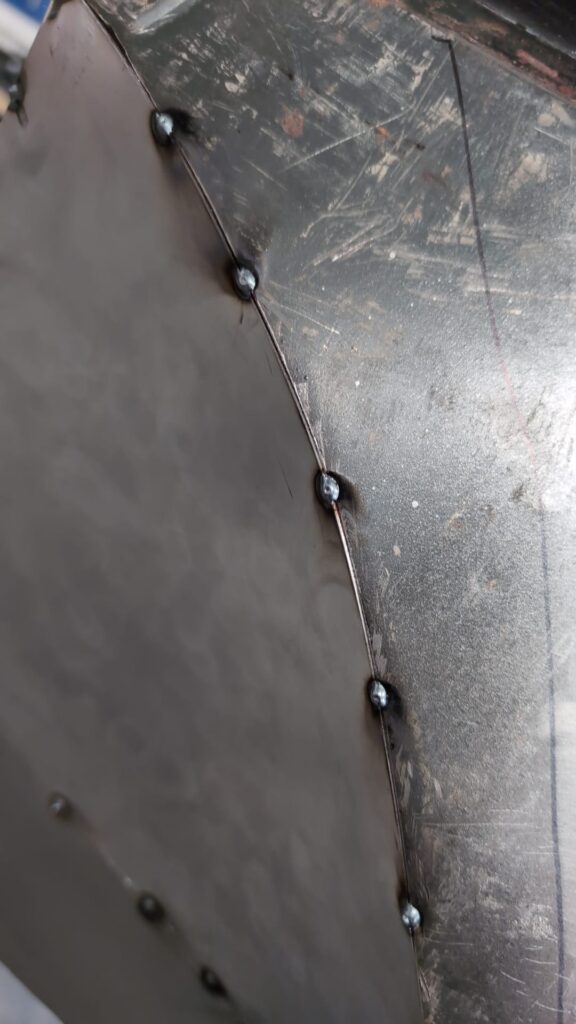
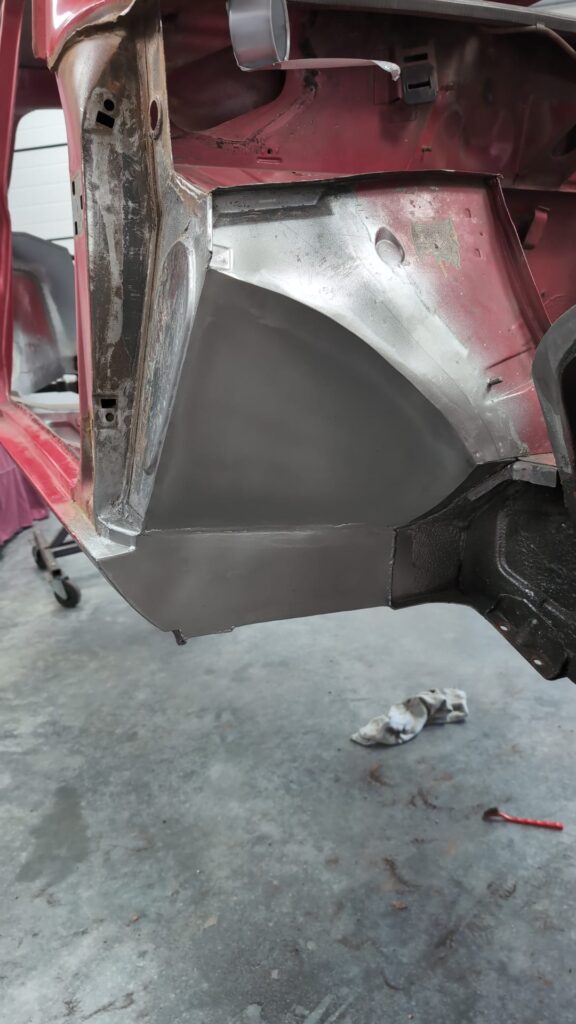
It is quite a tricky shape. That is why I choose to tack the sheet down first, so that I can mark it out precisely afterwards. Next, I cut the sheet to the exact size and weld it into place.
July 10, 2026
I try to plan ahead a little bit so that I can already gather the parts I need for the next steps in the build. Once I have finished the bodywork, the suspension will be next. The steering system is part of the suspension, and I still have some work to do there. The Renault 5 has a steering rack that requires well over 4 turns of the steering wheel to steer from all the way to the left to all the way to the right. For my Renault 5 Maxi Turbo, this seems like way too much to me. If I want to be able to correct the car when it breaks out from the rear, I will have to be quick(er). So I need a “quick rack”. There are steering racks available for variants of the Renault 5, such as the R5 Alpine, which has a steering rack with 3.5 turns. But nothing comes even remotely close to what I am looking for.
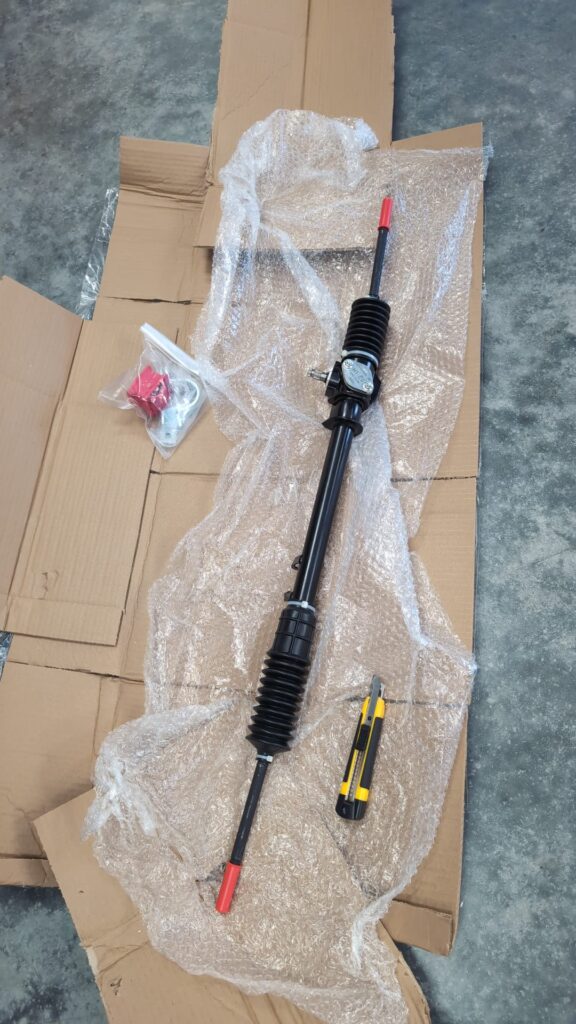
When choosing a steering rack, the length of the rack between the inner pivot points of the steering arms is an important parameter. To prevent bump steer, you ideally want to keep this length exactly the same. ChatGPT is trying to mislead me, according to ChatGPT the steering rack of a first-generation Citroen Xsara Coupe VTS has the perfect length and is 2.4 turns. What ChatGPT doesn’t tell me is that the steering rack in a Xsara Coupe is located behind the front axle, whereas the steering rack of a Renault 5 is in front of the front axle. With the Xsara Coupe steering rack, the car would steer to the right if you turn the steering wheel to the left. I continue my search and end up with an old acquaintance; for my Westfield, I used the steering rack from a Ford Escort. This steering rack also turns out to be exactly the right length, and in the Escort, it is located in front of the front axle. These steering racks are available new in various variants. I choose the fastest variant: 2.2 turns lock to lock.
July 11
Now that I have a steering rack, I have to make another choice: am I going for power steering or not? Initially, I consider making the car without power steering. My Westfield, GTM Libra, and RCB all three had no power steering. Okay, you have to use your muscles whilst parking, but otherwise, it is quite manageable. The Renault 5 will likely be somewhat heavier than the 3 cars I had before. The GTM Libra had less weight on the front axle, and 2.8 turns lock to lock. The Westfield and the RCB were really much lighter than the Renault 5. The Renault gets quite wide tires, and 2.2 turns lock to lock is seriously little. Michal from Gemini Racing convinces me; he plans to install power steering in his rally car.
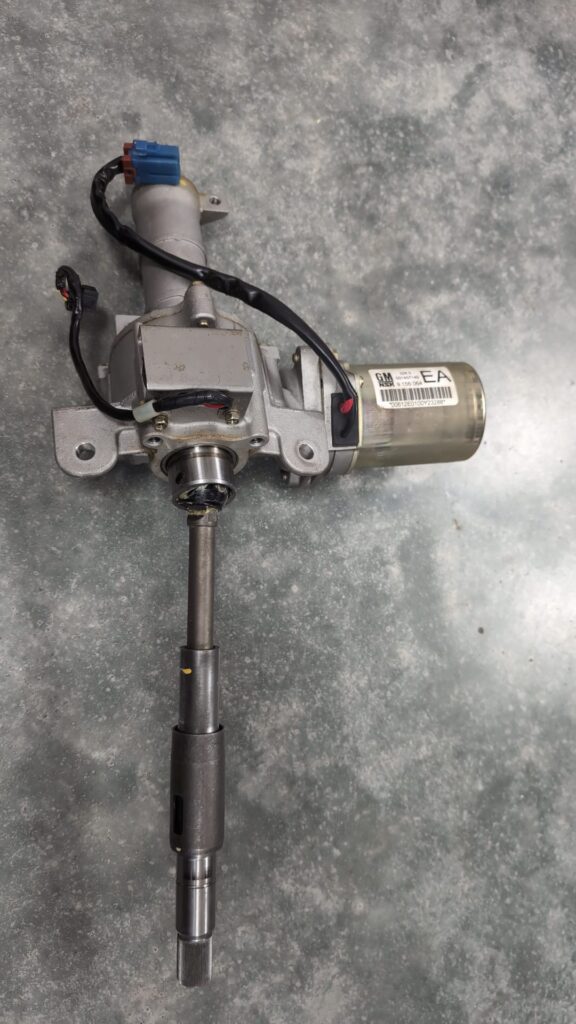
For cars and classics that are later converted to power steering, electric power steering is often used. This is easier to install and has the advantage that the power steering can be made speed-dependent. The steering column from various generations of the Vauxhall Corsa / Agila turns out to be a popular choice. Starting from the Corsa D, the power steering controller communicates with the rest of the car via CAN bus. The Corsa C power steering is possibly slightly less refined, but easy to control with two signals for speed and engine RPM. I am already looking into what I would need to do on the ECU side to generate these signals. And I am ordering a Corsa C steering column.

July 13
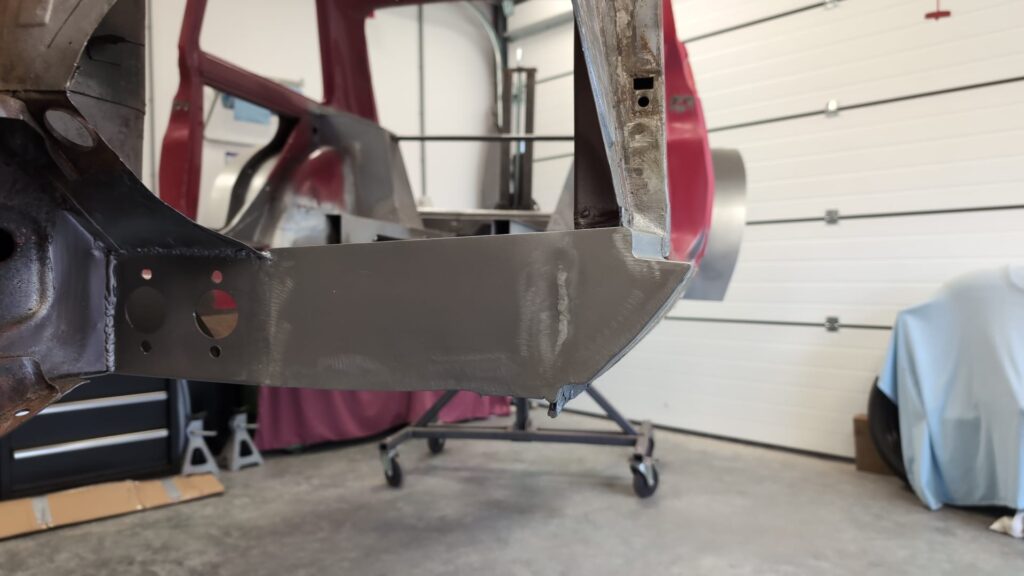
Today I continue with the bulkhead on the left side of the car. I already welded the bracket for the brake cylinders into the bulkhead a few weeks ago. From the photos by Matter Motorsport, I can see that I need to make a new bulkhead starting from this bracket. I mark out which part of the bulkhead needs to be cut out, and then I encounter a surprise.
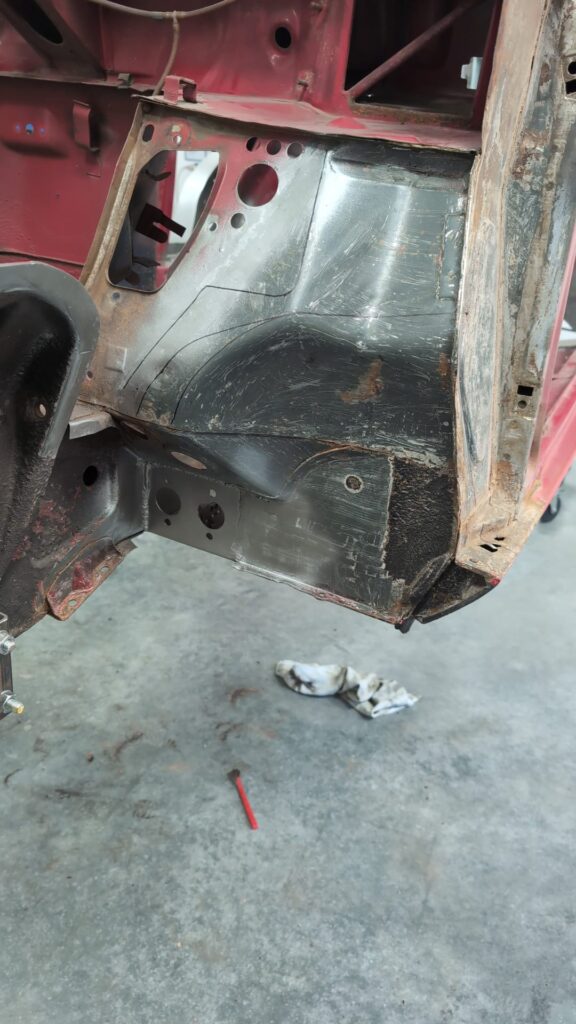
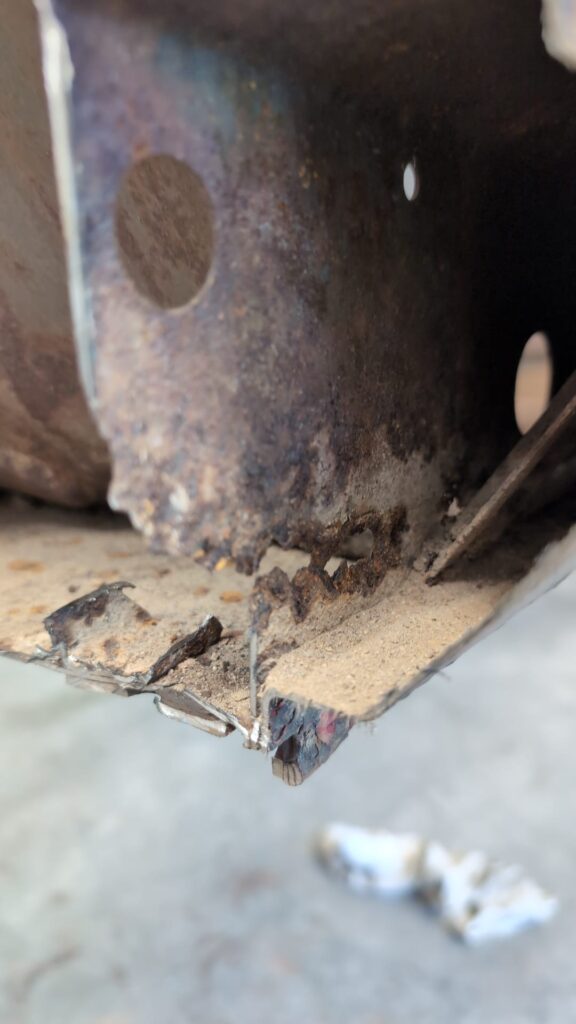
The vertical member of the sill is completely rotten. I will have to do something about that. After some deliberation, I decide to also remove the inside of the crossmember at the bottom of the bulkhead. That is the only way to replace the rotten part. This is going to be a bigger job than I had anticipated.

July 17, 2026
After grinding away the last remnants of the inside of the crossmember, I can see exactly how far I need to remove the vertical side of the sill to end up on solid material again. I cut out a new piece, in which I also make the new half of the hole. In the road car, these holes are closed with a plastic cap; in the rally car, they are used to run piping through the box beam. That is why I am not closing the hole.
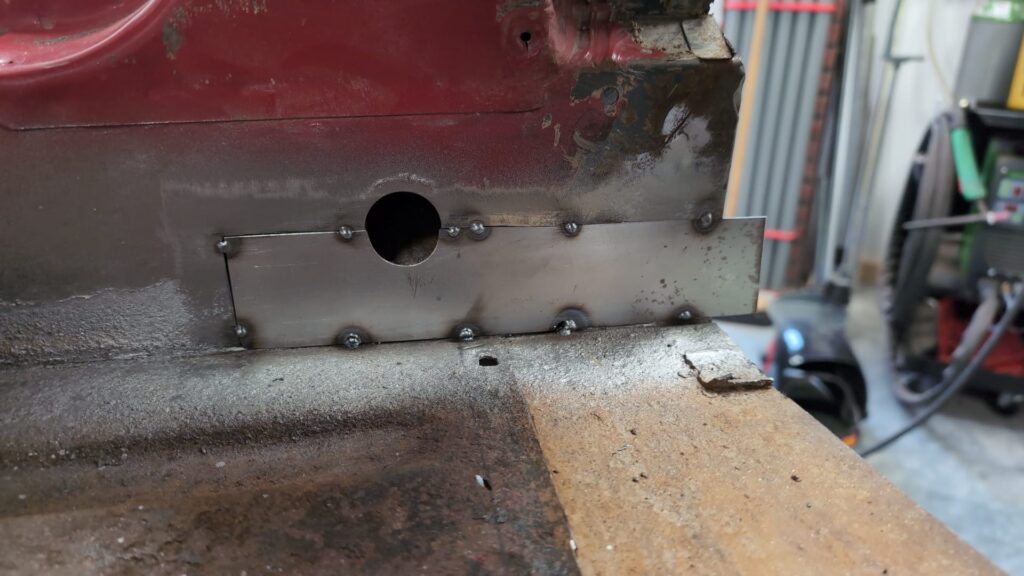
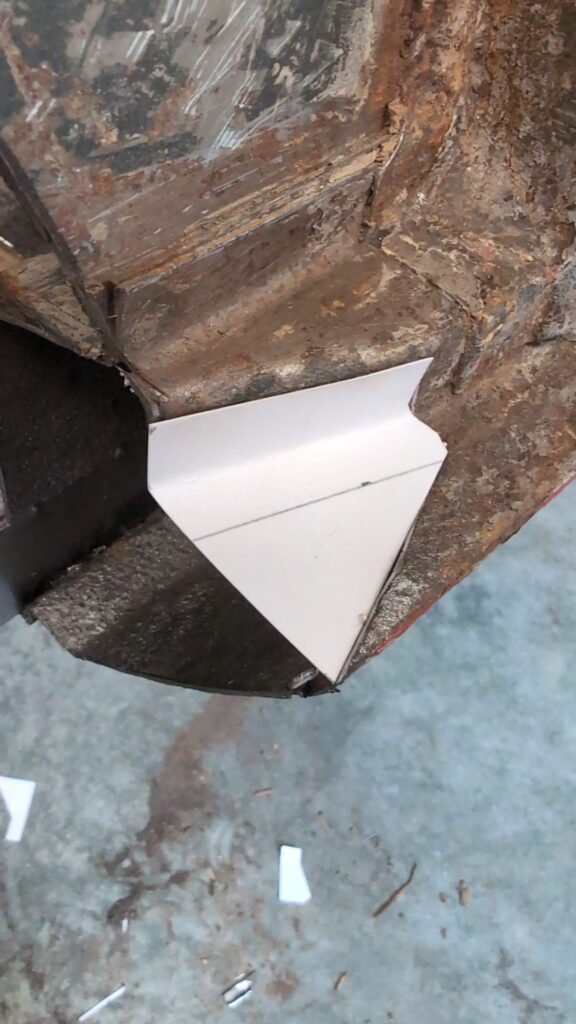
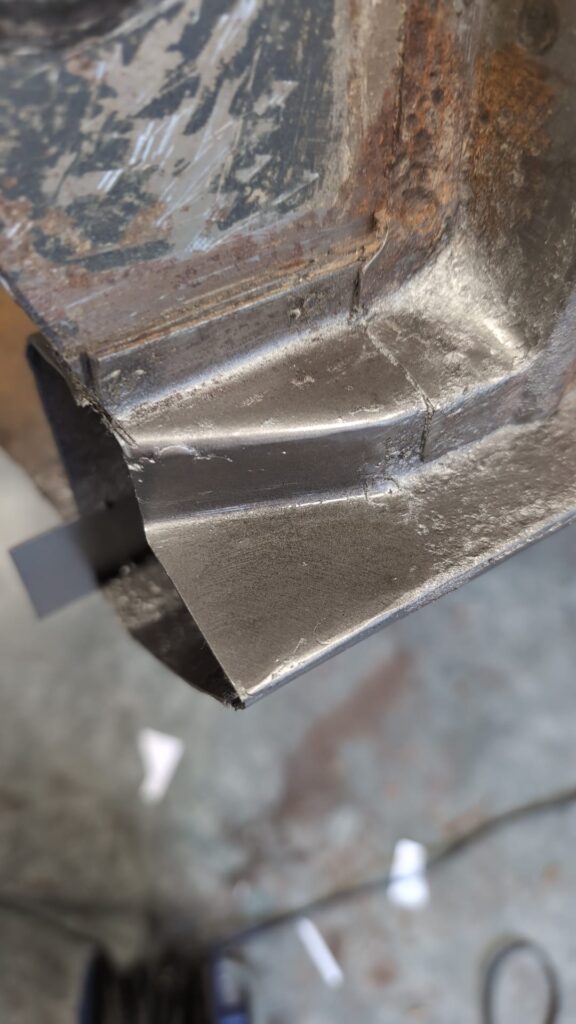
On the left side of the car, the end of the sill isn’t in great shape either. So, I am making a new piece in there as well. I am almost gaining so much confidence that I start to believe I can repair everything…
July 19, 2026
I am making the bulkhead on the left side out of 2 parts again. I am briefly considering trying it with a single sheet metal part, but it remains to be seen if that will work, and on the right side I did it in two parts as well…..